


Hey friends, is your patio ready for its first snow? A little fall prep can make winter care for an aluminum louvered pergola feel much less daunting. The key is knowing how your specific roof is meant to handle snow, wind, and freezing temperatures, and following its manufacturer’s instructions rather than guessing.
Canadian winter weather can shift quickly from snowfall to sun, thaw, and a hard freeze. Snow can build up on a roof, while meltwater can refreeze in gutters or drainage paths. Wind can catch exposed parts and put stress on connections. Ice can also stop louvers from moving freely.
A louvered roof is different from a fixed, solid roof because its blades can change position. But adjustability does not mean every louvered pergola is designed to carry the same snow or handle the same conditions. A closed roof may collect snow; an open or angled roof may shed or let some snow pass through, depending on the design and weather. Follow the instructions for your exact model, and confirm any snow-load or wind limits with the manufacturer and your local building requirements.
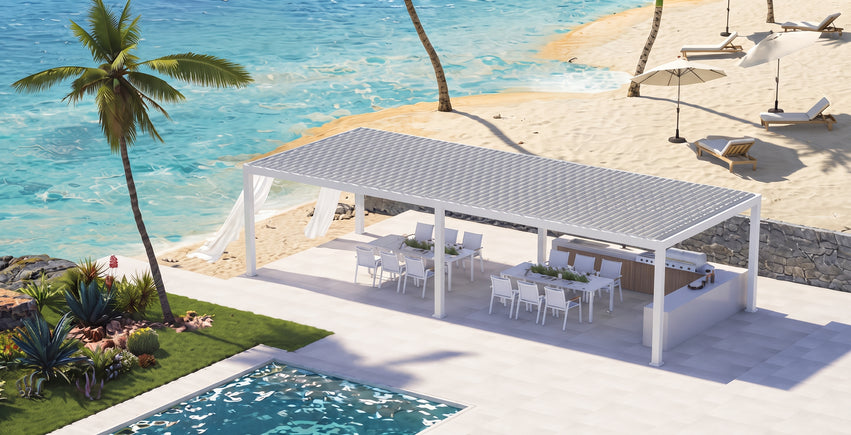
Before the first significant snowfall, check the product manual for the recommended winter louver position. For many systems, that may mean closing the louvers or setting them at a specified angle to help manage snow and reduce exposure. Don’t assume one position is right for every model, or every storm.
The AlunoTec Palora P6 motorized pergola has blades that rotate from 0 to 110 degrees for sun-shading, ventilation, and rain or snow protection. Its integrated rubber seals help block rainwater and reduce wind rattle. Still, the product’s adjustable design is not a substitute for checking its specific winter operating guidance.
Whatever the recommended position, don’t leave snow to accumulate. If you need to clear it, use a gentle method approved by the manufacturer, such as a soft broom from the ground. Avoid metal shovels, sharp tools, striking ice, or climbing onto the roof. If snow or ice cannot be removed safely, or you notice unusual movement or deflection, step back and contact the installer or manufacturer.
Don’t force iced louvers. If the blades are frozen in place, don’t keep trying the motor, remote, app, or hand crank. Wait until they’re clear and follow the manual before operating them again.
Open louvers may let wind pass through, but they can still rattle. On the Palora P6, integrated rubber seals are designed to help reduce that noise. Before winter storms arrive, take a look at the whole structure: anchors, fasteners, posts, and connections. If anything seems loose or damaged, follow the manufacturer’s guidance or ask a qualified installer to inspect it.
Don’t treat a louver position as a wind rating. The appropriate position and the structure’s limits depend on the specific configuration and installation. For the Palora P6 and any other pergola, confirm the manufacturer’s specifications and your local building requirements before relying on it in severe weather.
Leaves and debris can collect on louvers, in gutters, and around drainage outlets. When temperatures rise, water needs a clear path to drain; when they drop again, trapped water can freeze and create blockages.
Clear the roof and drainage routes before winter, then check them periodically during the season, especially after windy weather or a thaw. Look for leaves, ice, and anything that might divert water toward a doorway, walkway, or foundation.
The Palora P6 uses dual-cavity safety posts that separate water drainage channels from low-voltage wiring. That’s a helpful design detail, but it doesn’t remove the need to keep drainage paths clear. Follow the product’s instructions for inspecting and caring for those areas.
The Palora P6 has low-voltage 24V IP67 waterproof motors with CE and UL certifications. Its controls include the Tuya app, a multi-channel remote, and a manual hand-crank fallback. For winter use, follow the manual’s directions for operating the motor and controls in cold or icy conditions.
Keep electrical connectors dry, properly secured, and clear of standing water or ice. Don’t assume a waterproof motor means every connector or electrical component can be exposed or handled the same way. If the louvers or drive mechanism seem frozen, stop rather than trying several controls or forcing the hand crank.
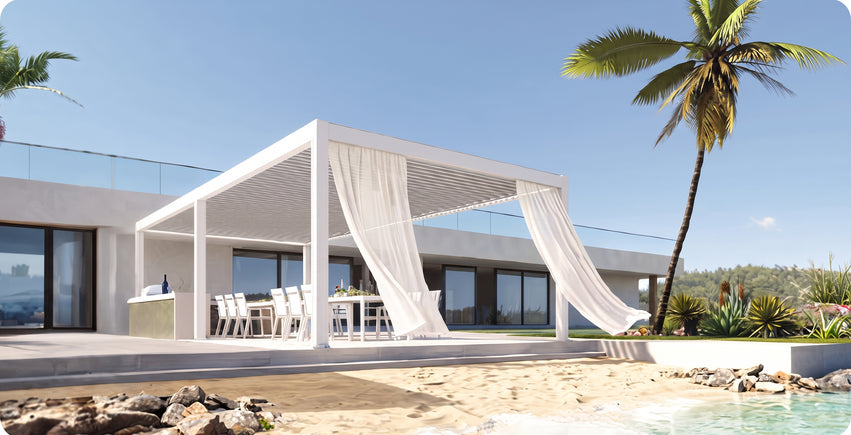
A calm, dry afternoon is a great time to give the pergola a quick seasonal once-over.
The Palora P6 is built from heavy-duty aluminum and uses a modular assembly design. Still, no material or feature replaces seasonal inspection and care that matches your local conditions.
Fabric curtains, netting, and shade accessories can catch wind or hold snow and ice. Take them down or secure them before heavy weather, following their care instructions. A few minutes now can save a frustrating cleanup later.
A closed louver roof can make your outdoor space more inviting on a crisp winter day, but it doesn’t turn an open pergola into an enclosed room or guarantee protection from winter weather. If you’d like to add warmth, explore Majic Backyard’s patio heater collection. Use any heater according to its manual, with the required clearances and ventilation. Never enclose a space around a fuel-burning heater.
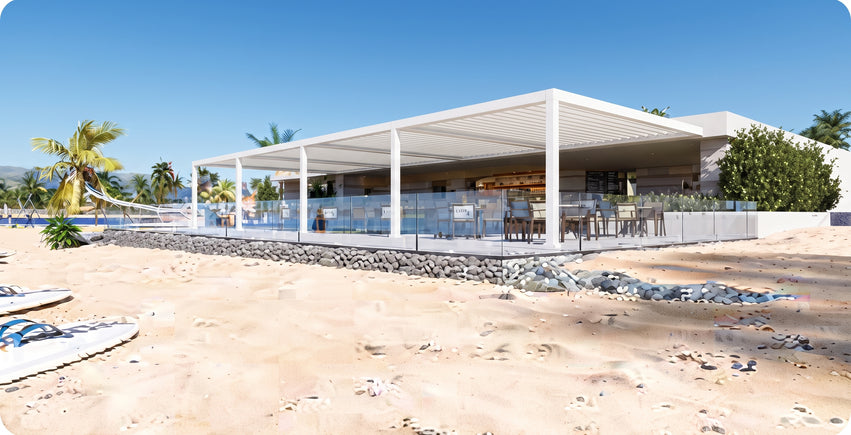
Before winter settles in, take a few minutes to:
The Palora P6 comes in black, white, and grey, with listed sizes of 10' × 10', 10' × 13', 13' × 13', and 20' × 13'. You can view the Palora P6 or browse the full pergola collection. For any model, confirm the specifications for your exact configuration and your local requirements before making decisions about winter weather.
And as you plan your outdoor space, Majic Backyard offers free shipping on most products, an easy return policy, and a price match guarantee. Winter prep doesn’t have to be perfect: a little thoughtful care can help you feel more confident when the forecast changes.